Roof Damage After a Storm in Pensacola: What Should Homeowners Do Next?
In the wake of Hurricane Isaias, many homeowners across Pensacola and Northwest Florida are assessing their properties, cleaning up debris, and wondering whether their roofs sustained damage. Even when everything looks fine from the ground, strong winds can loosen shingles, damage flashing, or create vulnerabilities that aren't immediately visible.
If you're concerned about possible roof damage, knowing what to do next can make an already stressful situation a little easier. Who should you call first? Will homeowners insurance cover wind damage? And what's the difference between a home inspector and an insurance adjuster?
Here's what Florida homeowners should know about roof damage, insurance claims, and when an inspection may be needed.
1. What Should You Do If You Suspect Wind Damage to Your Roof?
You don't have to see missing shingles or a hole in your roof to have concerns after a major storm. Wind can affect roofing materials in ways that aren't always visible from the yard.
Some potential warning signs include:
Missing, lifted, curled, or displaced shingles
Shingle pieces or roofing debris around your property
Damaged flashing near vents, chimneys, or roof edges
Loose gutters or damaged soffits
New water stains on ceilings or walls
Water entering the attic or living areas
Safety should always come first. Avoid climbing onto your roof to investigate possible damage, especially when surfaces may be wet, loose, or unstable.
Instead, walk around your property from a safe distance and photograph anything unusual. If you notice a leak or exposed roofing materials, contact a qualified roofing professional about preventing further damage.
It's also important to remember that not every roofing issue is storm-related. Age, normal deterioration, installation problems, and previous damage can sometimes produce similar warning signs.
2. Will Homeowners Insurance Cover Wind Damage to a Roof?
One of the most common questions after a storm is whether homeowners insurance will pay for roof repairs or replacement.
The answer depends on your policy, the cause of the damage, and the insurance company's evaluation.
Many Florida homeowners insurance policies provide some form of windstorm coverage, but coverage terms, exclusions, deductibles, and limitations can vary.
For example, damage caused by a covered wind event may be treated differently from damage attributed to normal wear, deterioration, or a preexisting condition.
Florida homeowners should also understand that hurricane deductibles can differ from standard homeowners insurance deductibles. Depending on the policy and circumstances, a hurricane deductible may apply.
Before assuming your roof damage is covered, review your policy or speak directly with your insurance agent or carrier.
An inspection alone does not guarantee insurance coverage, payment, or approval for a roof replacement.
3. How Do You File a Roof Insurance Claim After Wind Damage?
If you believe your roof was damaged during a storm, contacting your insurance company promptly is an important first step.
A general process looks like this:
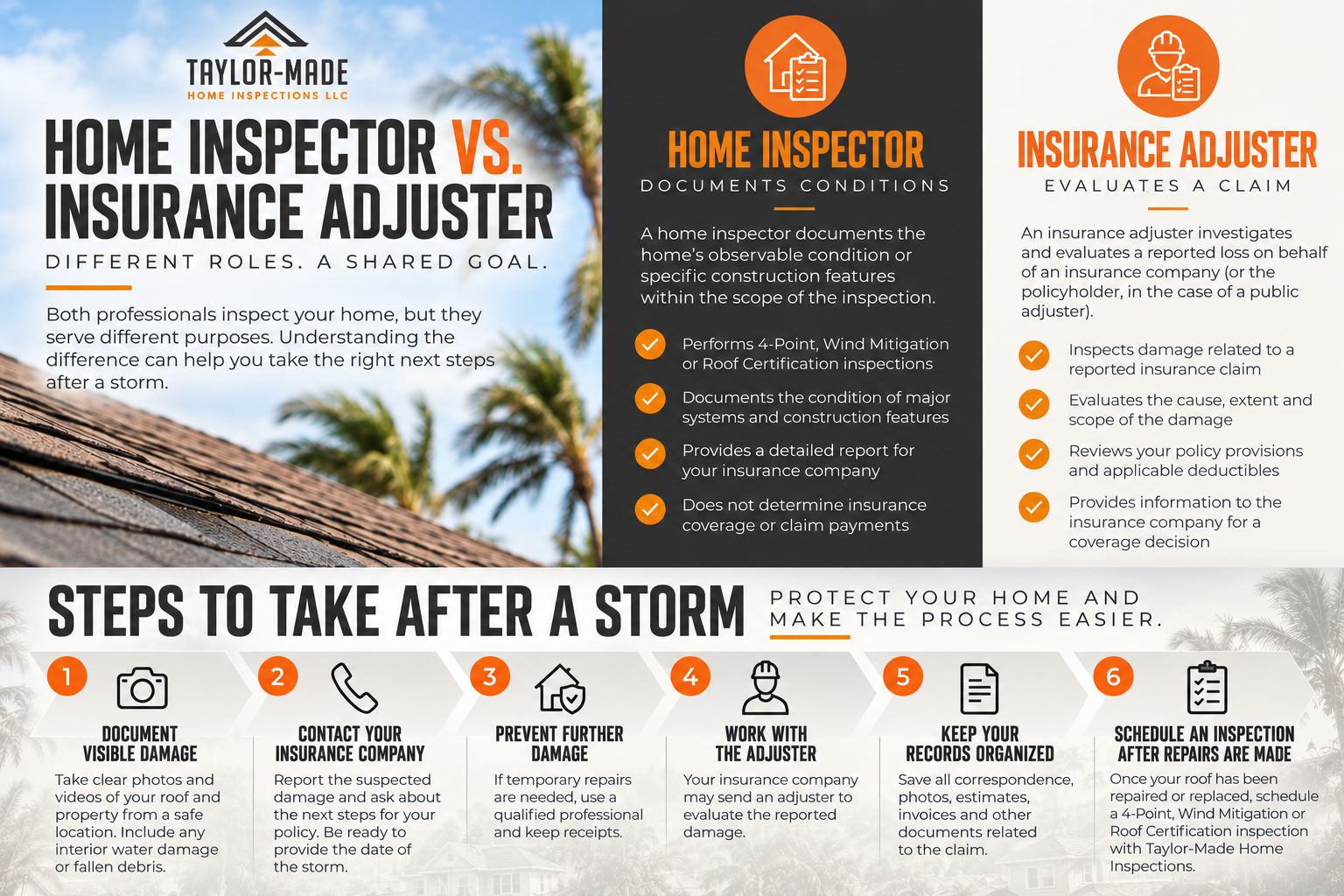
Document the damage. Take clear photographs or videos of visible damage from safe locations. Include any interior water damage, fallen debris, or affected exterior materials.
Contact your insurance company. Report the suspected damage and ask about the next steps for your particular policy. Be prepared to provide the approximate date of the storm.
Prevent additional damage. If temporary repairs are necessary, use a qualified professional when appropriate. Document the work and keep receipts.
Work with the assigned adjuster. Your insurance company may arrange for an adjuster to inspect the property and evaluate the reported loss.
Keep your records organized. Save correspondence, estimates, invoices, photographs, and other documents associated with the claim.
Avoid authorizing extensive permanent repairs before discussing the situation with your insurer, unless immediate work is necessary for safety or to prevent further damage.
Florida's Department of Financial Services provides additional guidance for homeowners navigating storm-related claims.
4. What Does an Insurance Adjuster Look for After Roof Damage?
An insurance adjuster evaluates reported property damage as part of the insurance claims process.
Depending on the circumstances, the adjuster may review:
The location and extent of reported roof damage
Evidence relevant to the reported cause of loss
Damage to other parts of the home
Photographs, repair estimates, and supporting documentation
Applicable policy provisions and deductibles
The adjuster's findings help inform the insurer's evaluation of the claim. The insurance company ultimately makes its coverage determination under the policy.
There are different types of adjusters. Company and independent adjusters work on behalf of insurance companies, while licensed public adjusters represent policyholders under a contractual arrangement.
This brings us to an important distinction that homeowners sometimes misunderstand.
5. Home Inspector vs. Insurance Adjuster: What's the Difference?
A home inspector and an insurance adjuster may both examine portions of a home, but their responsibilities are different.
A home inspector documents property conditions or construction features within the scope of a particular inspection.
For example, a 4-Point inspection typically documents the condition and characteristics of a home's roof, electrical, plumbing, and HVAC systems for insurance underwriting purposes.
A Wind Mitigation inspection documents specific features that may help a home resist wind damage, such as roof-to-wall connections, roof deck attachment, roof geometry, and qualifying opening protection.
An insurance adjuster evaluates an insurance claim.
The adjuster's work focuses on the reported loss, including the nature and extent of damage and information relevant to the claim.
At Taylor-Made Home Inspections, our role is to provide accurate, professional inspection documentation. We do not act as insurance claims adjusters, determine whether storm damage is covered, or decide what an insurance company should pay.
If your immediate concern is filing a claim for roof damage, your insurance company is the appropriate starting point.
If your insurance carrier requests a 4-Point, Wind Mitigation, or Roof Certification inspection, that's where our services may come into the picture.
Understanding this difference can save homeowners time and help them contact the right professional for their situation.
6. What Happens If Your Roof Needs Repairs or Replacement?
If your roof requires repairs or replacement, work with an appropriately licensed and insured roofing contractor who can explain the proposed work and any necessary permits.
Keep copies of important records, including:
Roofing contracts and invoices
Building permits and inspection records
Documentation of the roofing materials installed
Photographs of completed work
Any information about wind-resistant features added or improved
These records may be helpful when updating your homeowners insurance information.
After roof work is complete, ask your insurance agent whether updated inspection documentation is needed.
A new roof can change information previously recorded about your property, but not every repair requires a new insurance inspection.
7. Do You Need a New Wind Mitigation Inspection After Replacing Your Roof?
Possibly, and this is an important step Florida homeowners sometimes overlook.
A Wind Mitigation inspection documents specific construction features that can affect a home's resistance to wind.
During a roof replacement, some of those features may change or become easier to document. For example, roofing work may involve changes to the roof covering, roof deck attachment, or other qualifying components.
An updated Wind Mitigation report can provide your insurance company with documentation of the features present after the work is completed.
In Florida, Wind Mitigation reports are generally valid for up to five years, provided there have been no material structural changes or inaccuracies. Roof replacement may warrant updated documentation, depending on the work performed and your insurer's requirements.
Can a New Roof Help Lower Your Homeowners Insurance Premium?
Yes, replacing your roof can create opportunities for homeowners insurance savings, especially when the improvements include qualifying wind-resistant features.
An updated Wind Mitigation inspection documents features such as roof deck attachment, roof-to-wall connections, and secondary water resistance that may qualify for insurance discounts. Depending on the improvements made, homeowners may be eligible for additional credits that weren't reflected in their previous report.
While the amount of savings varies by home and insurance carrier, an updated Wind Mitigation report helps ensure your insurer has the information needed to evaluate any available discounts.
If you've recently replaced your roof, scheduling an updated Wind Mitigation inspection is a smart way to make sure qualifying improvements aren't overlooked.
8. What About a 4-Point Inspection After Storm Damage?
A 4-Point inspection serves a different purpose from a Wind Mitigation inspection.
It provides insurance-focused documentation of four major home systems:
Roof
Electrical
Plumbing
Heating and cooling (HVAC)
Insurance companies may request a 4-Point inspection when issuing or renewing a policy, particularly for certain older homes.
Following major repairs or improvements, your insurer may request updated documentation of one or more systems.
However, a 4-Point inspection is not a substitute for a storm-damage claim evaluation, and it should not be ordered solely for that purpose unless your insurer specifically requests it.
If you're unsure which inspection is needed, check with your insurance agent or carrier before scheduling.
9. Helping Pensacola Homeowners Navigate Insurance Inspections
Storm recovery can involve a lot of moving pieces, from addressing immediate damage to working with contractors and updating insurance records.
At Taylor-Made Home Inspections, we understand that homeowners don't always know which type of inspection they need, especially after major roof work.
We provide insurance-focused inspections throughout Pensacola and surrounding Northwest Florida communities, including:
Wind Mitigation Inspections: Documentation of qualifying wind-resistant construction features.
4-Point Inspections: Insurance-focused evaluations of the roof, electrical, plumbing, and HVAC systems.
Roof Certification Inspections: Roof-related documentation when requested by an insurance carrier, subject to the applicable inspection scope.
Our goal is to provide clear, accurate documentation and help homeowners understand the inspection process.
If your roof was recently replaced, or your insurance company has requested updated inspection documentation, we're happy to help you determine which of our services may be appropriate.
Need a Wind Mitigation or 4-Point inspection in Pensacola?
Contact Taylor-Made Home Inspections to request a quote or discuss the inspection your insurance company requires.
Resources:
Florida Department of Financial Services — Hurricane Recovery Resources
Florida Department of Financial Services
Florida Department of Financial Services
Florida Office of Insurance Regulation — Wind Mitigation Resources
FLOIR