How Long Does a Roof Last in Florida? Lifespan by Material, Warning Signs & Insurance Considerations
Your roof protects your home from Florida's intense sun, heavy rain, and hurricane-season winds. But how long should a roof actually last?
In Florida, an asphalt shingle roof may last around 15–30 years, while metal and tile roofing systems can last considerably longer. The actual lifespan depends on the roofing material, installation quality, maintenance, and weather exposure.
For homeowners in Pensacola, Pace, Milton, and Gulf Breeze, there's another important consideration: your roof's age and condition can also affect your homeowners insurance.
Whether you're buying a home, approaching an insurance renewal, or wondering if your current roof has a few more good years left, here's what you need to know.
How Long Do Different Roofing Materials Last in Florida?
Not every roof ages at the same rate. Some materials are designed to last decades, while others require replacement sooner, particularly in coastal climates.
The following are general planning estimates, not guaranteed lifespans.
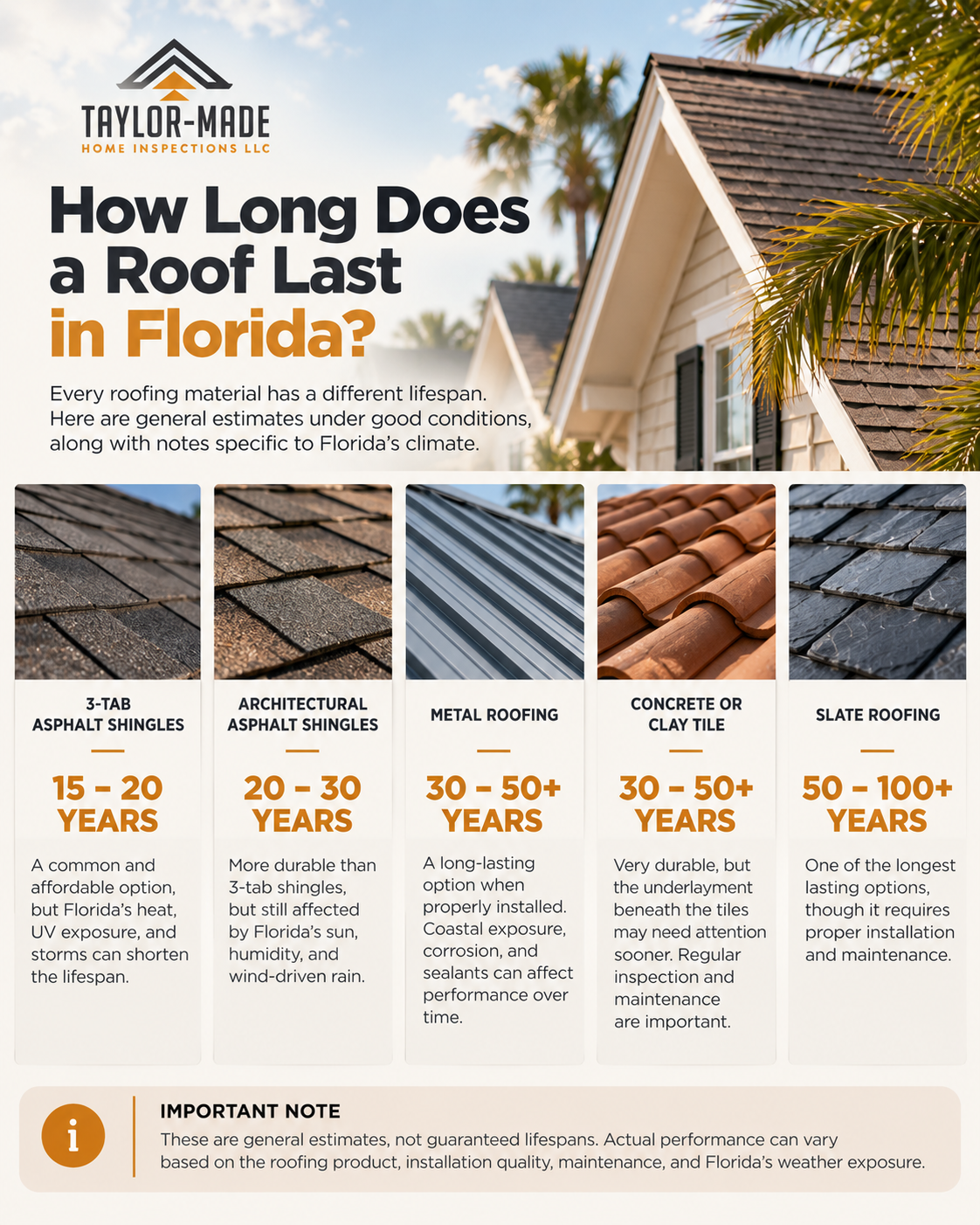
Actual performance can vary significantly depending on the product, installation, maintenance, and exposure.
Asphalt Shingle Roofs
Asphalt shingles are common throughout Northwest Florida because they're relatively affordable and available in many styles.
However, prolonged UV exposure, heavy rain, and strong winds can gradually weaken the shingles and their protective granules.
Architectural shingles generally offer better durability than traditional 3-tab shingles, but neither is immune to Florida's weather.
Metal Roofs
Metal roofing is another popular option in Florida, particularly for homeowners looking for a durable roofing material.
A properly installed metal roof can last several decades. However, coastal exposure, corrosion, deteriorating fasteners, and damaged sealants can affect its performance.
The type of metal, protective coating, and installation method all influence its longevity.
Tile Roofs
Clay and concrete tile roofs can have long service lives, but the tiles themselves aren't the entire roofing system.
The underlayment beneath the tiles may deteriorate before the tiles reach the end of their useful life.
This means a tile roof can look relatively good from the outside while still needing professional attention beneath the surface.
Why Do Roofs Wear Out Faster in Florida?
Florida's climate creates challenges that homeowners in other parts of the country may not experience as frequently.
1. Heat and UV Exposure
Constant sunlight gradually breaks down roofing materials.
On asphalt roofs, UV exposure contributes to aging and deterioration of the shingles. Sealants and other roofing components can also become brittle over time.
2. Hurricanes and Strong Winds
Strong winds can loosen shingles, damage flashing, and compromise vulnerable roof areas.
Even when damage isn't immediately visible from the ground, wind-driven rain can expose weaknesses around roof penetrations, vents, and other transitions.
After significant storms, homeowners should look for visible changes and contact an appropriate roofing professional when damage is suspected.
3. Poor Attic Ventilation
Attic ventilation plays an important role in managing heat and moisture beneath the roof.
When an attic isn't properly ventilated, excessive heat and moisture can contribute to problems involving the roof decking, insulation, and other building materials.
However, not every roofing system uses the same ventilation design. A qualified professional should evaluate whether the attic's ventilation is appropriate.
4. Installation Problems
Even high-quality roofing materials can fail prematurely when they're installed incorrectly.
Examples include improperly installed flashing, incorrect fastening, and problems with roofing underlayment.
These issues can create opportunities for water intrusion and reduce the roof's expected service life.
5. Neglected Maintenance
Small problems can become expensive when left unaddressed.
Clogged gutters, damaged flashing, overhanging branches, and minor leaks can all contribute to deterioration.
Routine maintenance won't make a roof last forever, but it can help prevent avoidable damage.
What Are the Signs Your Roof May Be Nearing the End of Its Life?
Roof age is useful information, but visible condition matters just as much.
Some common warning signs include:
Curling or cracked shingles: May indicate weathering or deterioration.
Missing shingles: Can leave portions of the roofing system vulnerable to water intrusion.
Excessive granule loss: May indicate aging asphalt shingles.
Damaged or loose flashing: Can create potential leak points.
Water stains on ceilings or walls: May indicate moisture intrusion that needs investigation.
Sagging roof areas: Can signal structural concerns requiring prompt professional evaluation.
Recurring roof leaks: May suggest that repairs aren't addressing an underlying problem.
Not every stain or dark streak means a roof is failing. For example, some discoloration may be caused by algae rather than damaged roofing materials.
The important question is whether the roof is still performing as intended.
If you're noticing multiple warning signs, a qualified roofing professional can help determine whether repairs or replacement are appropriate.
Does Roof Age Affect Homeowners Insurance in Florida?
Yes. Florida insurance companies may consider a roof's age, condition, material, and remaining useful life when evaluating a property.
However, a roof turning 15 years old does not automatically mean it must be replaced to maintain homeowners insurance.
Florida law provides important protections for homeowners.
Under Florida Statute 627.7011, an insurer generally cannot refuse to issue or renew a qualifying homeowners policy solely because a roof is less than 15 years old.
For roofs that are at least 15 years old, insurers must allow homeowners to obtain an inspection from an authorized inspector before requiring replacement based on roof age. If the inspection indicates at least five years of remaining useful life, the insurer cannot refuse issuance or renewal solely because of the roof's age.
Insurance companies may still consider other underwriting factors, including the roof's actual condition.
If your insurance company has raised concerns about an older roof, ask what documentation it requires before assuming replacement is your only option.
What Is a Roof Certification Inspection?
A roof certification inspection, sometimes called a roof condition or remaining-useful-life inspection, provides documentation about a roof's condition for an insurance-related purpose.
Depending on the insurer's requirements, the inspection may document:
Roofing material and estimated age
Visible deterioration or damage
General roof condition
An assessment of remaining useful life
The report helps the insurance company evaluate the roof, but it doesn't guarantee that the insurer will issue or renew coverage.
For Pensacola-area homeowners with aging roofs, this type of inspection may be useful when an insurance company requests additional documentation.
What's the Difference Between a Roof Certification, 4-Point, and Wind Mitigation Inspection?
These inspections are related to homeowners insurance, but they serve different purposes.
Roof Certification Inspection
Focuses on the roof's condition and remaining useful life when that documentation is requested.
Documents four major systems: roof, electrical, plumbing, and HVAC. Insurance companies commonly request these inspections for older homes.
Documents specific construction features related to wind resistance, such as roof-to-wall connections, roof deck attachment, roof shape, and opening protection.
A Wind Mitigation inspection isn't designed to determine whether an aging roof needs replacement.
Understanding the difference helps homeowners schedule the correct inspection instead of paying for documentation their insurer hasn't requested.
How Can You Find Out How Old Your Roof Is?
If you purchased a home and aren't sure when the roof was replaced, start with any records that came with the property.
You may be able to find the installation date through:
Previous homeowner documentation
Roofing contractor invoices or warranties
Building permit records
Real estate transaction documents
Information provided by your insurance agent
Homeowners in Escambia and Santa Rosa counties can also check with the appropriate local permitting authority for available roofing permit records.
Keep in mind that an inspector may estimate roof age based on observable conditions, but appearance alone cannot reliably establish the exact installation date.
Frequently Asked Questions About Roof Lifespan in Florida
Is a 15-year-old roof too old in Florida?
Not necessarily. A 15-year-old roof may still have useful life remaining, depending on its material, installation, condition, and maintenance history. Its age may prompt additional insurance questions, but it doesn't automatically mean replacement is required.
Can a roof last 30 years in Florida?
Yes. Some roofing systems can last 30 years or longer, particularly when properly installed and maintained. However, Florida's weather exposure means homeowners shouldn't assume every roof will reach its advertised lifespan.
Can an old roof pass an insurance inspection?
Possibly. An older roof may satisfy an insurer's condition requirements if it has sufficient remaining useful life and no disqualifying defects. The inspection findings and the insurance company's underwriting requirements both matter.
Should I replace my roof before selling my house?
Not automatically. The roof's condition, remaining useful life, buyer expectations, and insurance requirements should all factor into that decision. Understanding the roof's condition before listing can help you make an informed choice.
Does a new roof qualify for homeowners insurance discounts?
It may. A new roof can affect insurance pricing, and certain documented wind-resistant construction features may qualify for Wind Mitigation credits. Actual savings depend on the property and insurance carrier.
If you've recently replaced your roof, ask your insurance agent whether an updated Wind Mitigation report could be beneficial.
Roof Inspections in Pensacola and Northwest Florida
Living along the Gulf Coast means your roof faces years of sun exposure, heavy rainfall, humidity, and occasional severe storms.
Whether you're buying an older home in Pensacola, preparing for an insurance renewal in Pace, or checking the condition of a roof in Milton or Gulf Breeze, understanding its condition can help you make more informed decisions.
At Taylor-Made Home Inspections, we provide insurance-focused inspection services throughout Pensacola, Pace, Milton, Gulf Breeze, and surrounding Northwest Florida communities.
Our services include Roof Certification, 4-Point, and Wind Mitigation inspections.
If your insurance company has requested documentation about your roof's condition or remaining useful life, we can help you determine which inspection report is appropriate.
Need a roof inspection for homeowners insurance? Contact Taylor-Made Home Inspections to schedule your inspection.